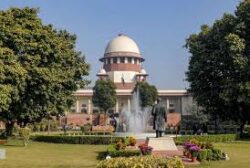
Constitutional Lawyer – Supreme Court of India | Writ Jurisdiction
Constitutional law forms the bedrock of the Indian legal system. The Constitution of India is the supreme law, and any law, executive action, or judicial order that is inconsistent with the Constitution is liable to be struck down. The Supreme Court of India, as the guardian of the Constitution, exercises original and appellate jurisdiction in constitutional matters, including enforcement of fundamental rights, judicial review of legislation, and resolution of disputes between the Union and the States. The practice at KV Law handles constitutional matters before the Supreme Court of India and the High Courts.
Article 32 – Writ Petitions Before the Supreme Court
Article 32 of the Constitution guarantees the right to move the Supreme Court for the enforcement of fundamental rights conferred by Part III of the Constitution. Dr. B.R. Ambedkar described Article 32 as the very soul of the Constitution. Under this article, the Supreme Court has the power to issue directions, orders, or writs, including writs in the nature of habeas corpus, mandamus, prohibition, quo warranto, and certiorari, for the enforcement of fundamental rights.
The practice files writ petitions under Article 32 in matters involving violations of fundamental rights by the State or its instrumentalities. These include matters involving the right to life and personal liberty under Article 21, the right to equality and non-discrimination under Articles 14 and 15, the right to freedom of speech and expression under Article 19(1)(a), the right against arbitrary detention, and other fundamental rights guaranteed by the Constitution.
Article 226 – High Court Writ Jurisdiction
The High Courts exercise writ jurisdiction under Article 226 of the Constitution, which is broader in scope than Article 32 as it extends not only to the enforcement of fundamental rights but also to the enforcement of any other legal right. The practice handles writ petitions before the High Courts of Delhi, Patna, and other High Courts, challenging administrative action, governmental orders, statutory authority decisions, and other actions that affect the rights of individuals and entities.
Where the High Court has declined to exercise its writ jurisdiction or has passed an order adverse to the petitioner, the matter may be brought before the Supreme Court by way of a Special Leave Petition under Article 136. The practice handles such appeals in constitutional matters before the Supreme Court.
Habeas Corpus
The writ of habeas corpus is the most powerful remedy against illegal detention. The practice files habeas corpus petitions before the Supreme Court and the High Courts in cases of illegal arrest, custodial detention without legal authority, and other forms of unlawful deprivation of personal liberty. Habeas corpus petitions require immediate attention and are heard on priority by the courts.
Judicial Review of Legislation
The Supreme Court exercises the power of judicial review to examine the constitutional validity of legislation enacted by Parliament and the State Legislatures. A law that violates fundamental rights, exceeds the legislative competence of the enacting body, or is otherwise inconsistent with the Constitution may be struck down by the Court. The practice advises and represents clients in matters involving challenges to the constitutionality of statutes, subordinate legislation, and executive notifications.
Fundamental Rights – Key Areas
The practice has handled matters involving several fundamental rights, including Article 14 (right to equality and equal protection of laws), Article 19 (freedoms of speech, assembly, association, movement, and profession), Article 20 (protection against ex post facto laws and double jeopardy), Article 21 (right to life and personal liberty, which has been expansively interpreted to include the right to privacy, the right to a speedy trial, the right to a clean environment, and other derivative rights), and Article 22 (protection against arbitrary arrest and detention).
Public Interest Litigation
Public Interest Litigation (PIL) is a unique feature of the Indian legal system that allows any person to approach the Supreme Court or the High Courts for the enforcement of rights that affect the public at large. The practice advises on matters involving public interest, including environmental matters, governance issues, and the enforcement of statutory obligations by public authorities.
Challenging Executive and Administrative Action
The practice handles matters involving challenges to executive orders, administrative decisions, quasi-judicial orders, and actions of statutory authorities that are arbitrary, unreasonable, or violative of the principles of natural justice. This includes matters involving disciplinary proceedings, service matters, regulatory actions, and decisions of statutory bodies.
For queries relating to constitutional matters, please visit the Contact page. Related: Supreme Court Practice | Appeals & SLPs | Criminal Defence